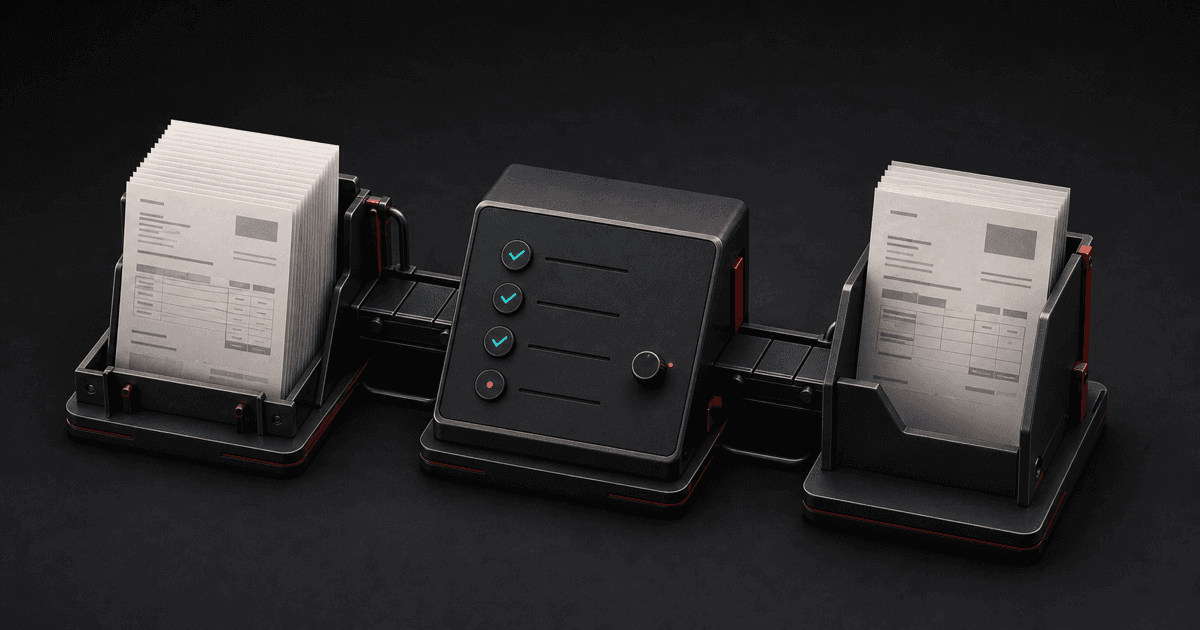
The presentation deck looks impeccable: 60 slides detailing a multi-layered reference architecture, complete with autonomous agent swarms, vector retrieval pipelines, policy engines, and enterprise governance layers. Big consulting firms present these pre-packaged blueprints as the definitive shortcut to digital transformation. They promise that adopting an off-the-shelf blueprint eliminates uncertainty and accelerates time to value.
In reality, adopting a generic enterprise framework before defining your specific system requirements is one of the fastest ways to derail your budget. Instead of accelerating deployment, it forces your engineering team to shoehorn unique operational logic into an over-engineered corporate template.
The financial fallout is immediate. Unnecessary architectural layers turn what should be lean production deployments into runaway money pits, ballooning enterprise ai integration costs while degrading latency and maintainability.
The Catalog of Corporate AI Frameworks
Every major management and IT consultancy now sells its own branded enterprise AI blueprint. While their marketing brochures use slightly different vocabulary, the core proposition remains identical: pay for their intellectual property up front, adopt their comprehensive architecture, and let their consultants bill hundreds of hours configuring it for your environment.
A brief look at the current market reveals how pervasive this pattern has become:
- McKinsey markets an open reference architecture designed to scale generative AI through reusable patterns like knowledge management, chatbots, and agentic workflows, backed by shared retrieval-augmented generation (RAG) services and policy-as-code tooling.
- Deloitte promotes an "Agentic Enterprise" blueprint and multi-agent system architecture that positions autonomous AI agents as the core operational logic of modern business operations.
- Capgemini rolled out its Resonance AI Framework in July 2025, promising to bridge the gap between generative AI experimentation and measurable business outcomes via agentic patterns.
- Infosys pitches a five-layer reference architecture under its Topaz initiative, where each layer introduces dedicated personas, API interfaces, and deployment models.
- TCS markets AI WisdomNext, an aggregation and orchestration engine intended to facilitate model switching and agent deployment without platform lock-in.
- Accenture deploys an "Intelligent Digital Brain" architecture focused on decision intelligence and multi-agent orchestration.
None of these concepts are inherently evil, and the underlying whitepapers often contain sensible architectural observations. The danger lies in treating these enterprise frameworks as a default starting point.
Consultancy sales teams use comprehensive frameworks because they give a enterprise sales representative something tangible to slide across the table to a CIO. But once the contract is signed, the client is left footing the bill for hundreds of billable hours required to customize an abstract monolith that was never engineered for their specific problem.
The Anatomy of the 10x Cost Explosion
When designing an AI-backed software system, the goal is to harness dynamic model behavior to solve a precise business challenge. For any given engineering problem, there are roughly 5,000 potential variations of architecture and technical implementation. However, only one of those configurations is optimal for your workload, your data security requirements, and your operational budget.
Finding that target requires working forward from concrete business requirements toward an architecture, never the reverse.
When teams adopt a consultant framework first, they invert the engineering process. Developers find themselves forced to implement architectural components simply because the blueprint says they belong there:
- Dedicated vector databases deployed where an existing PostgreSQL database with basic text search or standard indexing would deliver better accuracy at zero additional hosting cost.
- Complex multi-agent orchestration loops configured where a single structured API call and clear prompt engineering would complete the task in 200 milliseconds.
- Sprawling middleware and governance gateways inserted into execution paths where simple code-level validation rules would eliminate failure modes without adding network hops.
┌────────────────────────────────────────────────────────┐
│             The Consultant Blueprint Trap              │
│                                                        │
│  [User Request]                                        │
│         │                                              │
│         ▼                                              │
│  [Governance Gateway Layer]  ── (Extra Latency: 120ms) │
│         │                                              │
│         ▼                                              │
│  [Agent Orchestrator]        ── (Cascading Loop: 4-8 LLM calls)
│         │                                              │
│         ▼                                              │
│  [Vector DB Cluster]         ── ($1,500/mo Infrastructure)
│         │                                              │
│         ▼                                              │
│  [Redundant Middleware]     ── (Added Failure Surface)│
│         │                                              │
│         ▼                                              │
│  [Final LLM Response]        ── High Token & Cloud Bills
└────────────────────────────────────────────────────────┘
The consequence is a severely under-optimized architecture whose operational running costs run between ten to twenty times higher than a custom-tailored system built from first principles.
Consider what this multiplier means in concrete financial terms. A production inferencing and infrastructure bill that should cost $50,000 per month easily swells to $500,000 or even $1,000,000 per month. This runaway expenditure does not occur because the underlying foundation models are inherently unaffordable; it occurs because the architecture was locked in before the technical team understood the workload's true requirements.
When organizations struggle with runaway spending, the problem often mirrors the AI maturity model where enterprise AI stalls at the orchestration chasm, trapping teams in heavy coordination layers instead of shipping business value.
Worked Example: Over-Engineered Framework vs. Pragmatic Implementation
To understand how consultant-driven frameworks quietly destroy budgets, let us examine a typical enterprise use case: routing customer service inquiries and querying internal policy documentation.
The Blueprint Approach: Multi-Agent Cascade
Under a typical "Agentic Enterprise" reference model, an incoming customer message must pass through a classifier agent, an orchestrator agent, a vector search retriever agent, and an evaluation agent before generating a response.
Each agent call represents a distinct network round-trip to an LLM, consuming input tokens, generating output tokens, and introducing points of failure:
# The Over-Engineered Multi-Agent Approach
# Result: 4 LLM calls per request, 4,000+ tokens consumed, 3.8s latency

async def handle_inquiry_framework(user_prompt: str):
    # 1. Intent Classification Agent (LLM Call #1)
    intent = await call_agent("intent_classifier", user_prompt)

    # 2. Orchestrator routes to Knowledge Agent (LLM Call #2)
    orchestration_plan = await call_agent("orchestrator", f"Route {intent}")

    # 3. Vector DB Search Agent generates embeddings & queries cluster
    query_vector = await generate_embeddings(user_prompt)
    context_docs = await dedicated_vector_db.query(query_vector, top_k=10)

    # 4. Synthesizer Agent drafts the response (LLM Call #3)
    draft_response = await call_agent("synthesizer", context_docs, user_prompt)

    # 5. Policy & Guardrail Agent evaluates response (LLM Call #4)
    final_response = await call_agent("guardrail_evaluator", draft_response)

    return final_response
This pattern consumes thousands of unnecessary input tokens per request. If your application handles 200,000 customer inquiries a month, paying for four distinct LLM round-trips plus dedicated vector database hosting turns a routine customer service workflow into a massive operational liability.
The Lean Approach: Deterministic Routing with Targeted Tool Calls
A pragmatic software architecture tackles the same problem using deterministic code paths, schema-driven outputs, and native database features. Instead of delegating every step to a non-deterministic agent loop, you enforce routing through code:
# The Pragmatic Requirements-First Approach
# Result: 1 LLM call, deterministic routing, <800ms latency

from pydantic import BaseModel, Field
from typing import Literal, Optional
import asyncpg

class RoutingDecision(BaseModel):
    category: Literal["billing", "technical_support", "policy_inquiry", "general"]
    search_query: Optional[str] = Field(None, description="Keywords for policy lookup")
    urgency: Literal["low", "medium", "high"]

async def handle_inquiry_pragmatic(user_prompt: str, db_pool: asyncpg.Pool):
    # Step 1: Single structured extraction call using a small, fast model
    decision: RoutingDecision = await llm_client.chat.completions.create(
        model="gpt-4o-mini",
        response_model=RoutingDecision,
        messages=[
            {"role": "system", "content": "Extract intent and targeted search keywords."},
            {"role": "user", "content": user_prompt}
        ]
    )

    context = ""
    # Step 2: Use existing PostgreSQL infrastructure if documentation is required
    if decision.category == "policy_inquiry" and decision.search_query:
        async with db_pool.acquire() as conn:
            # Native PostgreSQL hybrid search (Full-text + pgvector)
            rows = await conn.fetch(
                """
                SELECT content FROM knowledge_base
                WHERE to_tsvector('english', content) @@ plainto_tsquery('english', $1)
                ORDER BY ts_rank(to_tsvector('english', content), plainto_tsquery('english', $1)) DESC
                LIMIT 3;
                """,
                decision.search_query
            )
            context = "\n".join([r["content"] for r in rows])

    # Step 3: Single final completion call with strict context bounding
    final_response = await llm_client.chat.completions.create(
        model="gpt-4o",
        messages=[
            {"role": "system", "content": f"Answer using this context:\n{context}"},
            {"role": "user", "content": user_prompt}
        ]
    )
    return final_response.choices[0].message.content
By eliminating the redundant agent loops, you reduce token consumption by more than 70%, slash end-to-end latency from ~3.8 seconds down to ~800 milliseconds, and eliminate the monthly maintenance overhead of standalone vector databases.
Engineering teams looking to cut retrieval expenses can further inspect strategies for slashing production RAG costs by 80% through prompt caching and context optimization.
The True Cost of Requirements-First Engineering
Abandoning consultant blueprints does not mean operating without structure. It means replacing abstract conceptual frameworks with concrete engineering discipline.
When engineering teams start from scratch, analyze their specific data workflows, and build up an architecture step by step, the economic advantages are substantial. In practical application, taking this path requires roughly one-quarter of the development budget to move from initial idea to working production software.
Furthermore, because the resulting system contains zero superfluous middleware, runtime operating costs drop to approximately one-tenth of the monthly expense of a blueprint-driven implementation.
To achieve these efficiencies, your technical leadership must isolate four parameters before selecting any framework, SDK, or model tier:
- Dynamic Behavior Boundaries: Define precisely where non-deterministic AI reasoning is required versus where deterministic business logic (regular expressions, database queries, state machines) suffices.
- Data Ingestion and Access Paths: Map the actual volume, frequency, and structure of data queries. Do not spin up an isolated vector cluster when standard relational indexes solve your retrieval latency requirements.
- Latency and Financial Thresholds: Establish hard per-request execution budgets (e.g., maximum 1,200 ms total latency, maximum $0.008 per transaction) before architecting agent workflows.
- Failure Mode Engineering: Clearly identify what system failure looks like. A multi-agent system fails unpredictably when one agent misunderstands an intermediary prompt; a deterministic pipeline fails with clear, debuggable stack traces and status codes.
4 Best Practices to Control Enterprise AI Integration Costs
If your organization is currently planning or refactoring an AI integration, use these four rules to prevent architectural bloat and keep ongoing operational expenses under control:
1. Enforce Deterministic Routing Before LLM Ingestion
Never let an LLM decide how to route a request if deterministic code can do it. Use static schemas, URL paths, authorization tokens, and pattern matchers to direct application traffic. Reserve foundation models for processing unstructured data and generating natural language outputs, not for basic application control flow.
2. Leverage Existing Database Engines for Retrieval
Before provisioning managed third-party vector databases, evaluate the data engines your infrastructure team already manages. Modern relational databases like PostgreSQL (utilizing extensions such as pgvector alongside native tsvector full-text search) comfortably handle millions of embeddings while preserving transactional consistency, simplifying backup routines, and avoiding new vendor contracts.
3. Establish Granular Token and Latency Budgets
Set strict token consumption limits at the API gateway layer. Every architectural component should operate under an allocated token budget per execution step. When an engineer proposes adding a secondary evaluation agent or a reranking model, require a formal benchmark showing that the marginal quality improvement justifies the additional latency and inference cost.
4. Treat Frameworks as Checklists, Not Foundations
Consultant reference architectures and open-source frameworks (like LangChain or AutoGen) can serve as useful educational resources. Use them as late-stage checklists to confirm your team has addressed key operational concerns, such as audit logging, observability, and fallback handling.
However, they should be the last thing you review during system design, never the initial foundation upon which you construct your code.
Pragmatic Implementation Over Theoretical Slides
This dynamic is not unique to generative AI. Ten years ago, enterprises fell into the identical trap with cloud migrations, purchasing generic enterprise landing zones that racked up thousands in unused cloud services. Before that, the same mistakes occurred with big data lakes and sprawling ERP implementations. A pre-packaged framework is always marketed as an effortless shortcut to avoid hard technical thinking.
Yet the hard thinking must happen anyway. If you bypass it during initial planning, you will inevitably confront it later in production, accompanied by monthly infrastructure bills that are ten times higher than necessary.
Teams looking to build reliable, high-performance software without the overhead of massive consulting slide decks often turn to an experienced partner. When you want to translate complex machine learning capabilities into lean, maintainable software systems, explore our approach to custom AI solutions.
Focus on your user needs, measure actual token consumption, and engineer for business outcomes. Your systems will run faster, break less often, and protect your balance sheet from unnecessary consulting bloat.
Actionable Next Step
Audit your current AI pipeline against your actual business requirements this week. Identify every intermediary LLM call or standalone vector retrieval service currently running in staging or production, calculate its contribution to total transaction latency, and test whether a single structured prompt or standard database index can replace it.