Picture the Monday morning after the big cutover. Forty people log in to the new software. Within an hour, the first of them are standing at the desk of the colleague who has always known how to reverse a booking. Within two hours, everyone is reporting what is missing at the same time.
That is not the developers' fault. It is the result of a plan in which everything has to happen on one day.
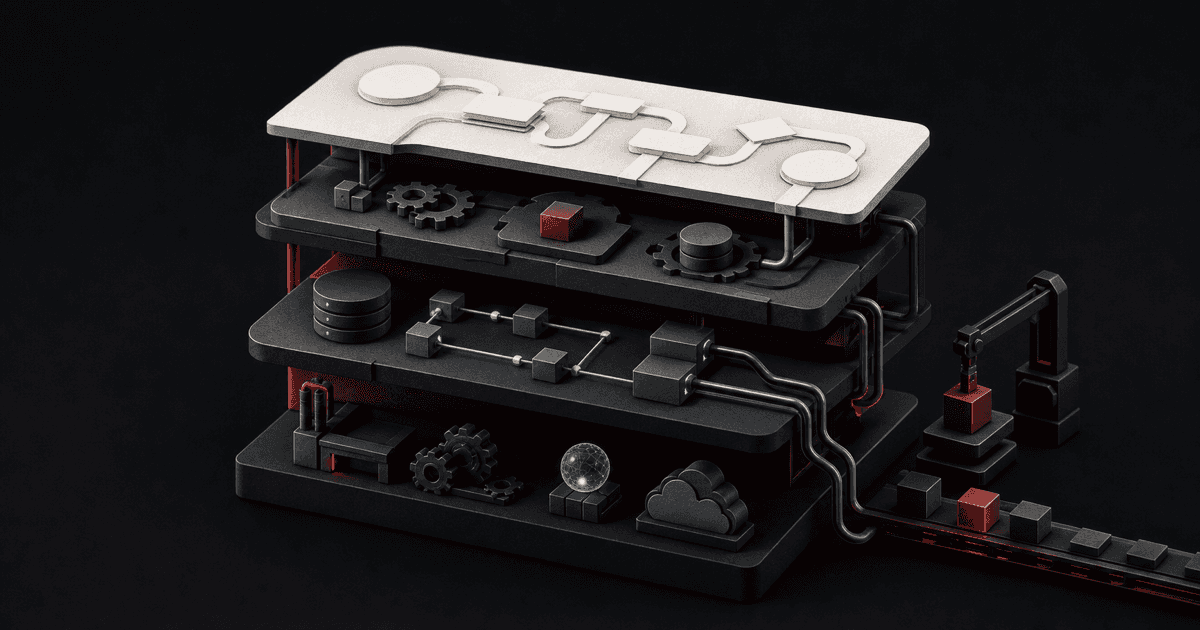
There is another way. You replace the old software one function at a time. Developers know this as the strangler fig pattern, named after the fig that grows around a tree until it stands on its own. The new system grows around the old one until the old one is no longer needed.
Look first, build second
The start is not technology. It is a day spent next to the people who work with the software. Which screens do they open, and in what order? Where do they retype something that already exists somewhere else? Where is there a note next to the monitor because the software cannot do something?
You often find that some functions are no longer needed by anyone. The product is no longer sold, the partner is gone, nobody has read the report in years. What you do not rebuild, you do not have to test or maintain. It matters that the business department confirms every removal, because year-end closing or stocktaking will not show up in a short measurement.
If you count usage, do it anonymously and in aggregate, and involve the works council beforehand. This is about the software, not about the performance of a person.
One function at a time
The first function is built in the new system. It reaches the old database through a bridge, and the old database stays the leading one until the end. The next function follows, then the one after. Each is moved over completely, with a pilot group working with it live before everyone switches. If people have to jump between two programs for a single task, they will be happy with neither.
At the end the last function has moved, the old database is switched off, and there is no Monday morning on which everything changes at once.
What it can cost
We worked through both ways on an invented example: an ERP system with 60 functions and 40 employees, at 120 euros per developer hour. All values are assumptions. You should use your own.
With these assumptions, the classic way comes to about 523,000 euros and the step-by-step way to about 320,000 euros. The difference comes mainly from the fact that a third of the functions are not rebuilt at all, and from the fact that employee onboarding splits into small steps instead of one big dip. Even if no function drops out, the step-by-step way is not more expensive in this calculation. The bridge to the old database costs effort, while the rehearsals and the cutover weekend fall away.
Whether it works out the same for you depends on your system. The calculation with all assumptions and formulas is in the guide.
Where it gets hard
The guide is not a step-by-step manual. It names the places where it gets difficult: a database that has to be correct in two worlds at once, employees who keep working in the old software on the side, and functions that are only needed once a year.
If you have a project like this ahead of you and want to talk about the first step: Request a modernization check.
You can find the full guide for free on GitHub, in German: https://github.com/ProjectMakersDE/legacy-software-abloesen (CC BY 4.0). An English version of the readme is included.